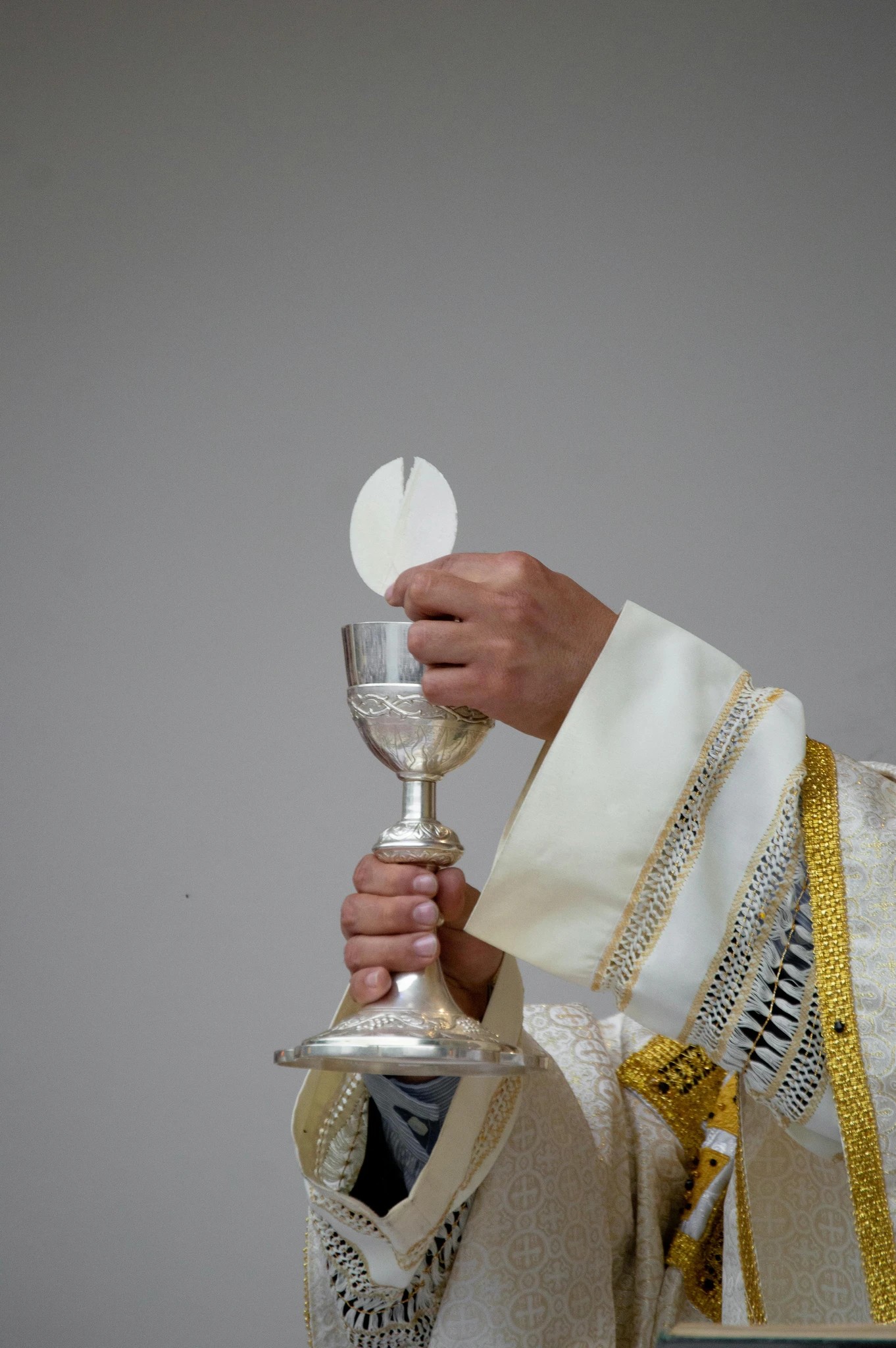
In the Catholic Mass, this action is called the commingling and takes place during the Fraction Rite (the breaking of the Host).
The priest breaks off a small piece of the consecrated Host and places it into the chalice containing the Precious Blood while praying quietly, "May this mingling of the Body and Blood of our Lord Jesus Christ bring eternal life to us who receive it."
The Church understands this gesture in several ways:
- It symbolizes Christ's Resurrection.
- The separate consecration of bread and wine sacramentally represents Christ's Body and Blood separated in death.
- The placing of a fragment of the Host into the chalice symbolizes their reunion in the risen, living Christ.
- It signifies the unity of Christ.
- The General Instruction of the Roman Missal says the action signifies the unity of the Body and Blood of the Lord in the work of salvation, that is, Jesus Christ living and glorified.
- It recalls the unity of the Church.
- Historically, a fragment of the bishop's Eucharistic bread was sometimes sent to other churches and mixed with the chalice as a sign of communion with the bishop and the universal Church. Although that practice is no longer used, the symbolism of ecclesial unity remains.
So, while the gesture is small, it expresses a profound truth: the crucified Christ is now risen and alive, and the Church is united in Him.